E-Scooter Battery Buying Guide: Voltage, Capacity and Chemistry Explained
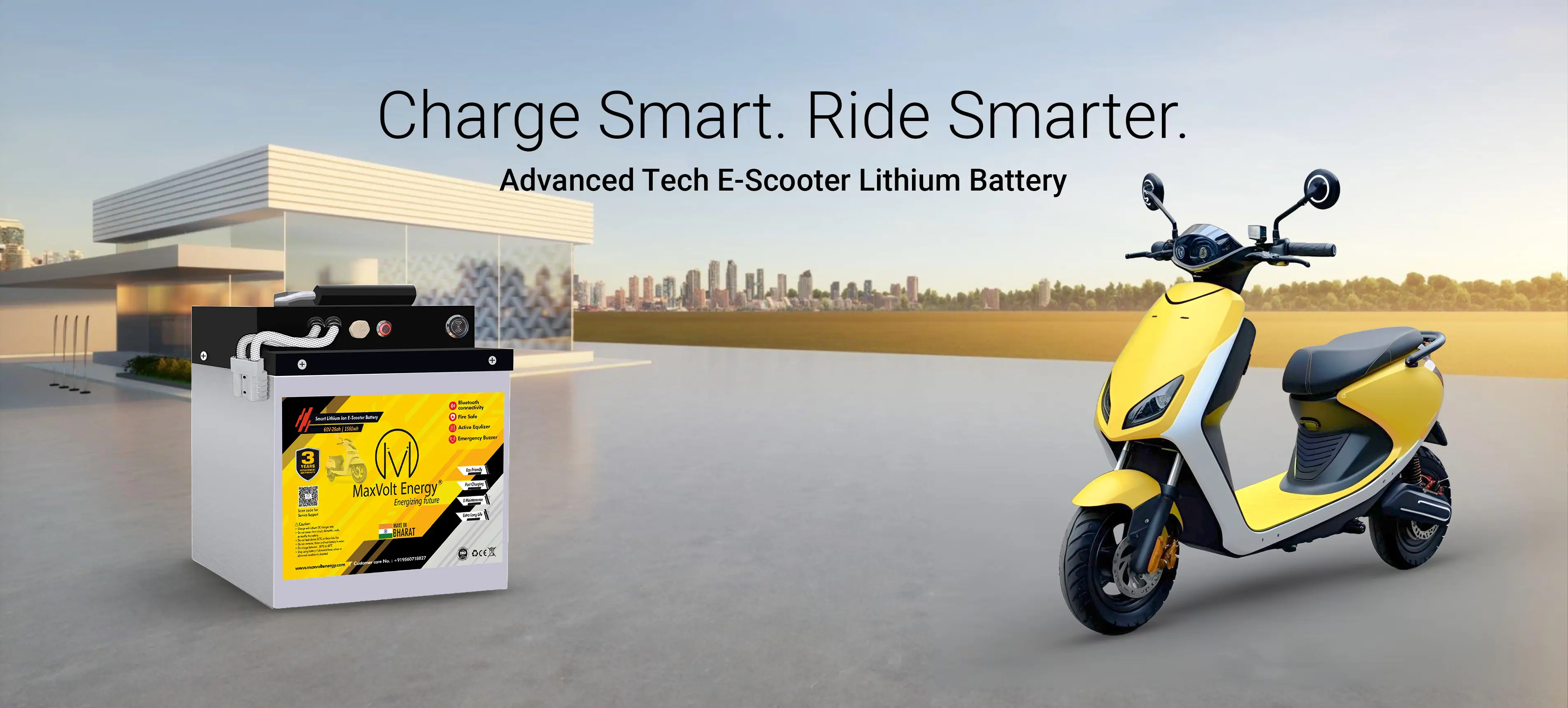
48V or 72V? NMC or LiFePO4? Here's how to match an e-scooter battery to your riding needs instead of just picking the biggest number on the spec sheet.
Shopping for an e-scooter or e-bike battery quickly turns into an alphabet soup of voltages, amp-hours and chemistries. Here's how to cut through the spec sheet and choose the pack that actually fits how you ride.
Start with voltage. Maxvolt's e-scooter range spans 48V to 74V. Lower voltages (48V, 60V) suit standard city scooters and moderate speeds, while higher voltages (63V, 74V) deliver stronger acceleration and better performance for high-speed or performance-oriented models. Voltage must match what your motor controller is designed for — it isn't a simple "higher is better" choice.
Next, capacity (Ah) determines range. Maxvolt packs run from 24Ah up to 40Ah. A daily city commuter doing short trips can comfortably run a lower-Ah pack, while delivery riders and longer commutes benefit from the higher end of the range. Multiply voltage by amp-hours to get watt-hours (Wh) — a more accurate way to compare total energy across different pack configurations.
Chemistry is the next decision. Maxvolt offers both NMC and LiFePO4 (LFP) cells. NMC packs are lighter and more compact for the same capacity, which suits weight-sensitive scooter designs. LiFePO4 trades a little energy density for a longer cycle life and greater thermal stability — a strong choice for riders who prioritize longevity and safety margin over shaving off grams.
Finally, check the pack format and certification. Maxvolt e-scooter batteries are available in PVC (lightweight) or box-pack (rugged, vibration-resistant) formats, and every pack is AIS 156 certified with an 8-layer BMS handling temperature, voltage, current and cell-balance protection. Whatever combination you land on, insist on a certified pack from a manufacturer that publishes its Type Approval Certificates — the spec sheet only tells half the story.