What Is a BMS, and Why It's the Most Important Part of Your Lithium Battery
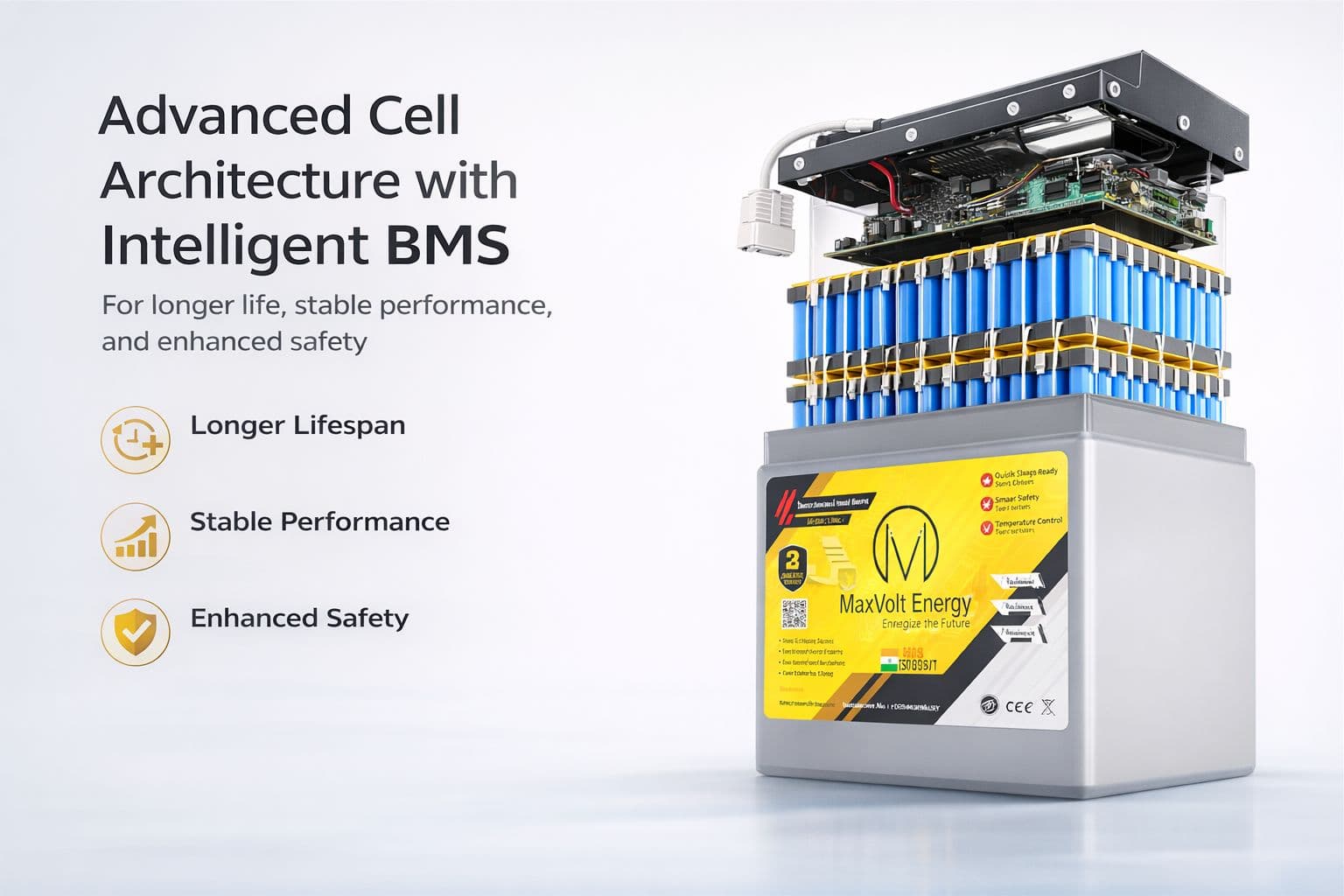
The cells get all the attention, but the Battery Management System is what keeps a lithium pack safe, balanced and long-lasting. Here's what it actually does.
When people compare lithium batteries, they usually look at voltage and amp-hours first. But the component doing the most work to keep that battery safe and long-lived rarely gets mentioned: the Battery Management System, or BMS.
A BMS is the electronic brain sitting between the battery cells and the outside world. Every Maxvolt pack ships with an advanced multi-layer BMS that continuously monitors four things: temperature, voltage, current and cell balance. Each of these on its own can cause a serious failure if left unchecked — together, they're the difference between a battery that ages gracefully and one that fails early or unsafely.
Temperature protection shuts down or throttles the pack if cells run hotter than is safe, guarding against thermal runaway — the failure mode behind most publicized EV battery fires. Voltage protection prevents overcharging past the cell's safe ceiling and stops discharge before cells are drained too deep, both of which shorten lifespan dramatically if left unmanaged.
Current protection cuts power instantly if a short circuit or an overcurrent event is detected, protecting both the battery and the vehicle's wiring. Cell balancing is the quieter but equally important job: in a multi-cell pack, individual cells drift out of sync over hundreds of charge cycles. A BMS actively redistributes charge across cells so the whole pack ages evenly, instead of the weakest cell dragging down the usable capacity of the entire pack years early.
This is why two batteries with identical voltage and capacity on paper can perform very differently in the real world. A pack with a robust BMS protects your investment cycle after cycle; a pack with a cheap or absent BMS is a ticking clock. When you're comparing lithium batteries, ask about the BMS as seriously as you ask about the cells — it's doing more to determine how long your battery actually lasts.