E-Rickshaw Fleet Battery Management: A Guide for Operators
How fleet operators manage e-rickshaw batteries at scale — charging schedules, swap logistics, monitoring and total cost of ownership.
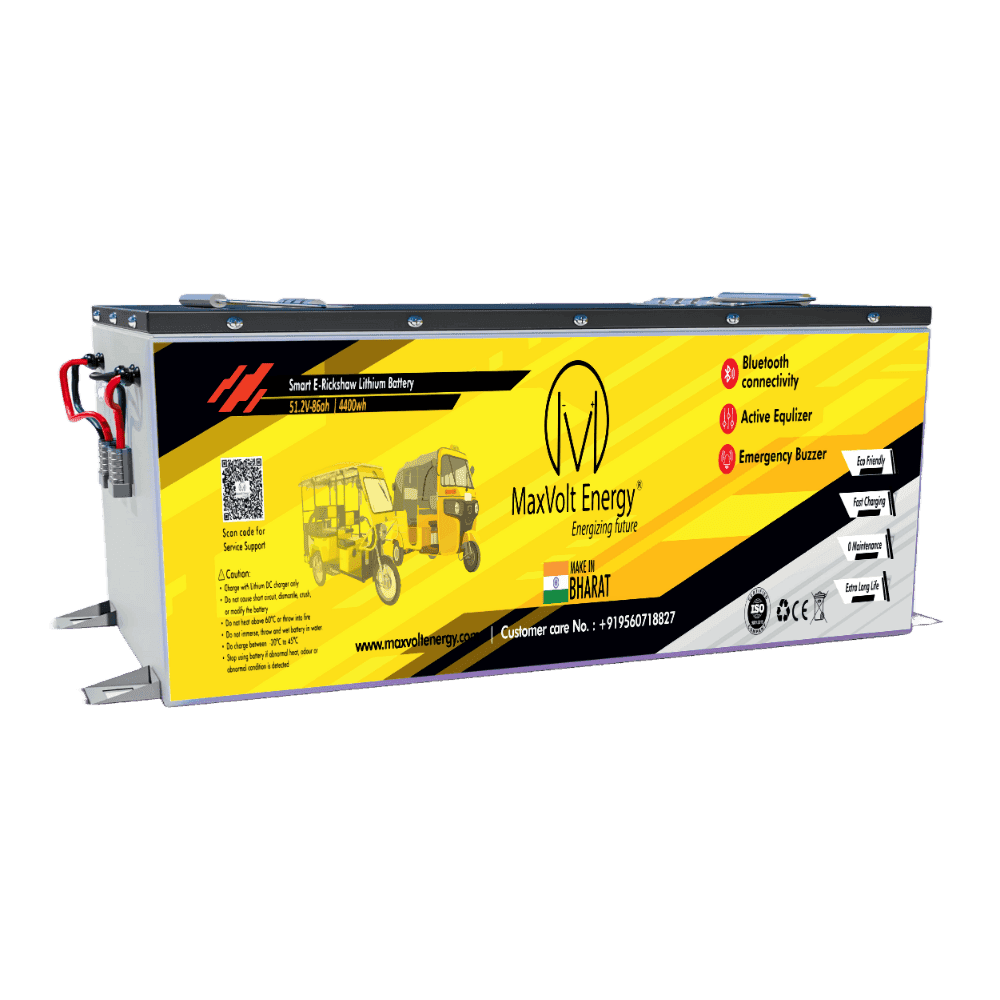
Managing one e-rickshaw battery is straightforward. Managing thirty, or three hundred, across multiple drivers and shifts is a different problem entirely — one where charging infrastructure, battery health monitoring, and swap logistics directly determine fleet uptime and per-vehicle earnings.
This is written for fleet operators and aggregators sourcing batteries at scale, not individual owners.
Charging Infrastructure & Scheduling
The core scheduling question for a fleet is whether vehicles charge overnight in bulk (simplest, but requires enough charging points for the full fleet at once) or in staggered shifts through the day (better utilization of fewer charging points, but needs active scheduling). Lithium's 2–3 hour fast-charge time makes staggered daytime charging genuinely practical in a way lead-acid's 6–8 hour charge time never allowed — a driver can recharge during a meal break and get back on the road the same day.
For larger fleets, planning charging infrastructure around peak-demand electricity tariffs (charging during off-peak hours where tariffs allow) can meaningfully reduce the fleet's electricity cost without any change to the batteries themselves.
Battery Health Monitoring Across a Fleet
At fleet scale, knowing which specific battery is degrading before it fails matters more than it does for a single owner — a battery that fails mid-route costs a driver's shift, not just a repair bill. A cloud-connected Smart BMS reporting state of charge, temperature trends and fault history per unit lets an operator flag a degrading battery for service before it strands a driver.
Standardizing on one battery specification (rather than mixing capacities or chemistries across the fleet) also simplifies spares inventory, swap logistics, and driver training — worth prioritizing over marginal per-unit savings from mixed sourcing.
Fleet Total Cost of Ownership
The same lithium-vs-lead-acid economics that apply to a single vehicle (see our full comparison) compound at fleet scale — fewer replacement cycles and less charging downtime across dozens or hundreds of vehicles adds up to a meaningfully different total cost picture than the per-unit price difference suggests. Bulk/fleet pricing from the manufacturer is also typically available and worth negotiating directly rather than paying retail per unit.
Common Applications
Frequently Asked Questions
How many charging points does an e-rickshaw fleet need?
It depends on fleet size and whether you charge overnight in bulk or stagger charging through the day. Lithium's 2–3 hour charge time makes staggered daytime charging practical with fewer charging points than overnight-only charging would require.
Can Maxvolt supply bulk orders for a fleet?
Yes — Maxvolt offers volume pricing for fleet operators and aggregators. Contact our OEM/bulk sales team with your fleet size and specification requirement.
Should a fleet standardize on one battery specification?
Generally yes — it simplifies spares inventory, service logistics and driver familiarity, and typically outweighs marginal savings from mixing suppliers or specifications across the fleet.
Does Maxvolt offer fleet battery monitoring?
Select product lines include a cloud-connected Smart BMS with remote monitoring — contact our team to discuss fleet-scale monitoring needs for your specific operation.
Explore Further
Have a Question About E-Rickshaw Fleet Battery Management: A Guide for Operators?
Talk to our team for sizing help, pricing, or technical guidance — no obligation.