E-Rickshaw Battery Operating Cost: How to Calculate Cost Per KM
How to calculate the real running cost of an e-rickshaw lithium battery per kilometre, with a worked example.
For a driver or fleet operator, the number that actually matters isn't the battery's price tag — it's the running cost per kilometre, since that's what determines daily earnings after expenses. Electricity tariffs vary by state and by time of day, so there's no single correct national number — but the calculation itself is straightforward once you know your battery's energy capacity and your local per-unit electricity rate.
The Calculation
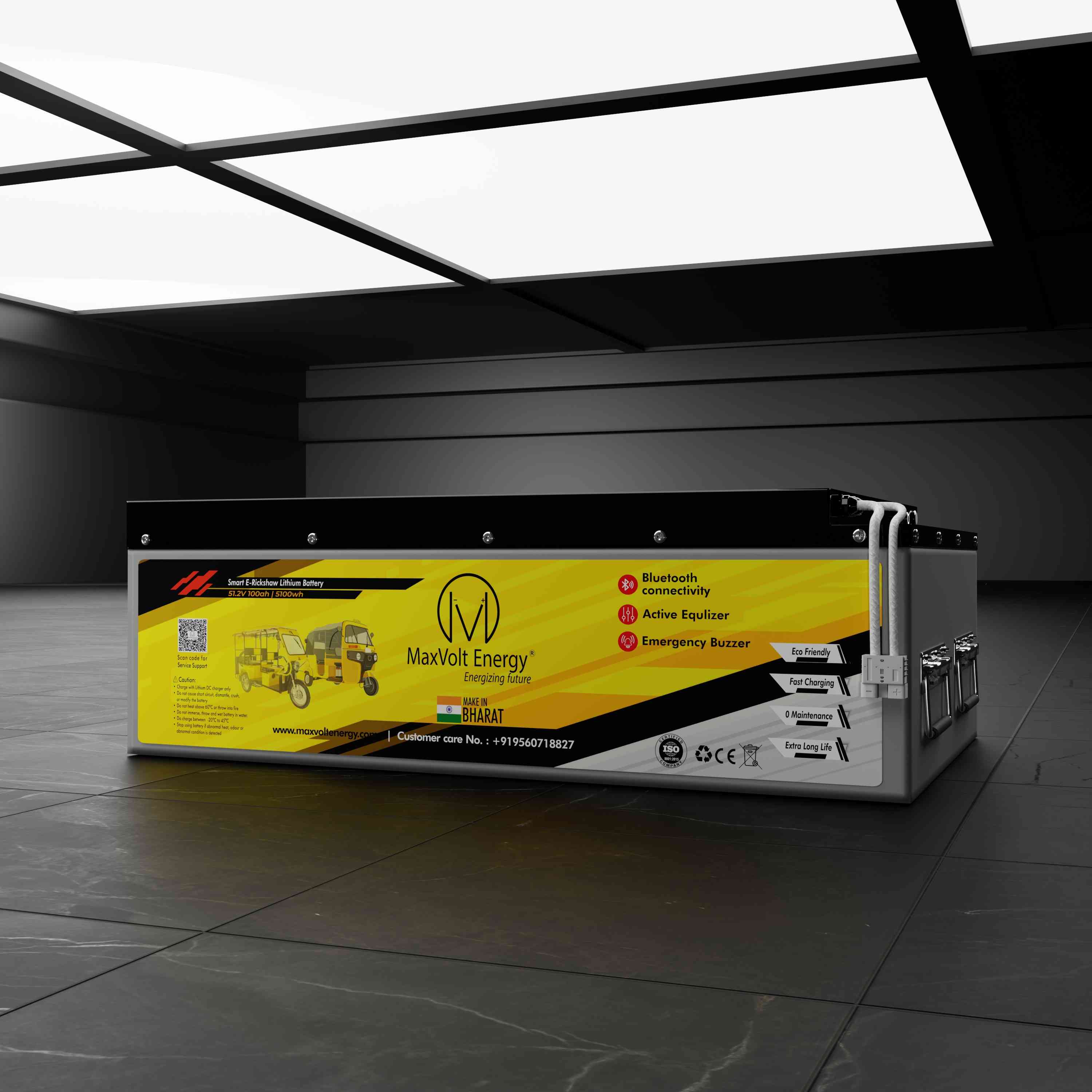
Battery energy (kWh) = Voltage × Amp-hours ÷ 1,000. A Maxvolt 51.2V 100Ah e-rickshaw battery stores roughly 5.1 kWh. Add roughly 10% for charging losses (energy drawn from the wall exceeds energy stored in the battery), so a full charge draws about 5.6 kWh from the meter.
Cost per full charge = kWh drawn × your electricity tariff (₹/unit). At an illustrative tariff of ₹8/unit, a full charge would cost roughly 5.6 × 8 = ₹45 — but use your actual commercial or domestic tariff, since this varies significantly by state and connection type.
Cost per km = cost per full charge ÷ range per charge. Range depends on load, terrain and driving style, but e-rickshaws typically achieve roughly 18 km per kWh of stored energy under normal conditions — so a 5.1 kWh pack might deliver approximately 80–90 km per charge. Dividing the charging cost by that range gives your real cost per kilometre.
Worked Example (Illustrative)
Using the figures above: ₹45 per charge ÷ 85 km ≈ ₹0.53 per km in electricity cost alone — before accounting for the battery's own amortized cost over its cycle life. This is an illustrative example, not a guaranteed number; recalculate with your actual tariff and observed range for an accurate figure.
To fold in the battery's own cost, divide the battery's price by its total lifetime range (capacity in kWh × 18 km/kWh × rated cycle life) to get an amortized cost-per-km for the battery itself, then add that to the electricity cost above for a fuller picture.
Why Lithium Wins This Comparison Over Lead-Acid
Lead-acid's lower round-trip efficiency (roughly 70–85% versus lithium's 95%+) means more electricity is wasted as heat during charging — directly raising the electricity cost per km. Combined with lead-acid's shorter cycle life driving a higher amortized battery cost per km, the full operating-cost picture favors lithium more heavily than the electricity cost alone suggests. See our full lithium vs lead-acid comparison for the complete breakdown.
Frequently Asked Questions
What is the electricity cost to charge an e-rickshaw battery?
It depends on your battery's capacity and local electricity tariff — use the formula above (kWh drawn × tariff) with your actual numbers. As a rough guide, a 51.2V 100Ah pack draws roughly 5.6 kWh per full charge including charging losses.
How many km does an e-rickshaw get per charge?
It varies with load, terrain and driving style, but a common rule of thumb is roughly 18 km per kWh of battery capacity — so a 5.1 kWh (51.2V 100Ah) pack typically delivers approximately 80–90 km per full charge.
Is lithium cheaper to run than lead-acid per km?
Yes, on two fronts — lithium's higher charging efficiency (95%+ vs 70–85%) reduces electricity cost per km directly, and its much longer cycle life reduces the amortized battery cost per km. See our lithium vs lead-acid comparison for the full picture.
Does driving style affect operating cost?
Yes — aggressive acceleration, overloading, and running on poor road surfaces all reduce effective range per charge, raising the real cost per km even though the battery's rated capacity hasn't changed.
Have a Question About E-Rickshaw Battery Operating Cost: How to Calculate Cost Per KM?
Talk to our team for sizing help, pricing, or technical guidance — no obligation.