EV Battery Price: Factors for 2-Wheelers & 3-Wheelers
What drives EV battery pricing for e-scooters, e-bikes and e-rickshaws in India, and how to get an accurate quote.
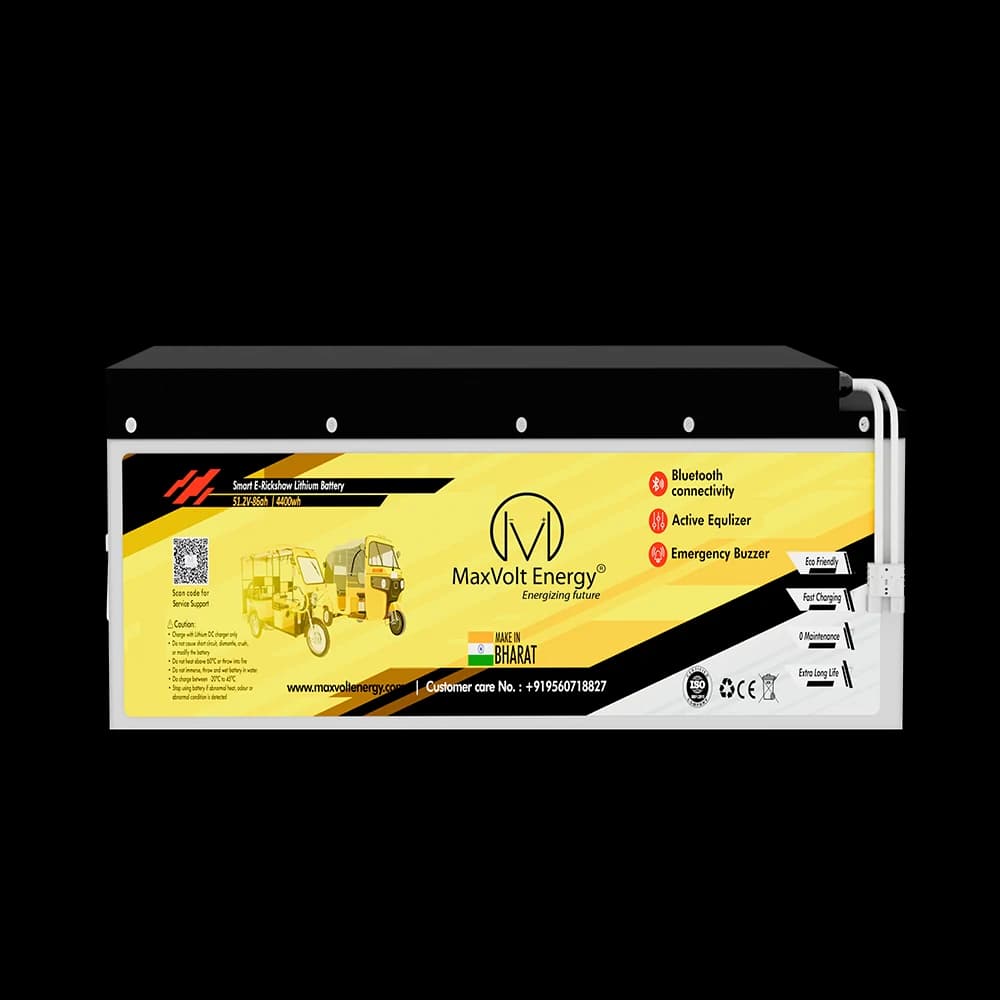
EV battery price is one of the most-searched questions from both first-time buyers and existing owners facing a replacement — and the honest answer is "it depends on the vehicle class and specification," which isn't satisfying but is accurate. A two-wheeler pack and a three-wheeler pack aren't priced on the same scale, and within each class, capacity and chemistry move the number substantially.
This page breaks down the actual variables so a quote makes sense when you get one, rather than publishing a number that would be outdated within a season.
Two-Wheeler vs Three-Wheeler Pricing
E-scooter and e-bike batteries (typically 48V–74V, 24Ah–40Ah) are priced differently from e-rickshaw batteries (typically 51.2V, 86Ah–200Ah) — not just because of the different voltage, but because the two vehicle classes prioritize different things. Two-wheeler packs are often built with NMC chemistry for lighter weight, while three-wheeler packs almost always use LFP for cycle life and thermal stability under heavy daily use — and the chemistries themselves carry different cell costs.
What Moves the Price Within a Vehicle Class
Capacity is the single biggest lever — a 200Ah e-rickshaw pack costs substantially more than an 86Ah pack of the same voltage and chemistry, since it simply contains more cells for more range.
BMS tier and certification add cost on top of the raw cell price — an AIS 156-certified pack with a robust BMS costs more than an uncertified equivalent-capacity pack, but it's also the difference between a battery that's road-legal and warrantied versus one that isn't.
New purchase vs. replacement pricing can differ too — a replacement battery bought standalone doesn't share cost with a new vehicle purchase, so it's worth comparing replacement quotes against the discount that sometimes comes bundled with a new-vehicle battery.
Getting an Accurate EV Battery Quote
Share your vehicle's voltage and current battery specification (or the make/model if you're unsure) with Maxvolt's team or an authorized dealer, and you'll get pricing matched to your actual requirement — including bulk pricing if you're outfitting a fleet.
Frequently Asked Questions
Why is an e-rickshaw battery more expensive than an e-scooter battery?
E-rickshaw batteries carry substantially more capacity (86–200Ah vs 24–40Ah for scooters) at a higher standard voltage, so they contain more cells — capacity is the largest single driver of EV battery price.
Is it cheaper to buy a battery with a new EV or replace one separately?
It varies by manufacturer and current offers — sometimes a bundled battery with a new vehicle carries a discount. Compare the bundled price against a standalone replacement quote for your specific capacity before deciding.
Does chemistry (LFP vs NMC) affect EV battery price?
Yes — cell cost differs between chemistries, and the choice is usually driven by the application (LFP for three-wheelers/cycle life, NMC for lighter two-wheeler packs) rather than price alone. See our LFP vs NMC comparison for the full picture.
How do I get current EV battery pricing from Maxvolt?
Contact our team via Request a Quote or WhatsApp with your vehicle's voltage and capacity requirement, or reach out to your nearest authorized dealer.
Explore Further
The broader pricing picture across all applications.
Chemistry, lifespan and how EV batteries are built.
Full spec table and pricing inquiry.
Full spec table and pricing inquiry.
Get current pricing for your vehicle.
Have a Question About EV Battery Price: Factors for 2-Wheelers & 3-Wheelers in India?
Talk to our team for sizing help, pricing, or technical guidance — no obligation.