EV Battery Guide: Chemistry, Lifespan & Price Factors
How electric vehicle batteries work, what drives EV battery lifespan and price in India, and how to choose the right pack.
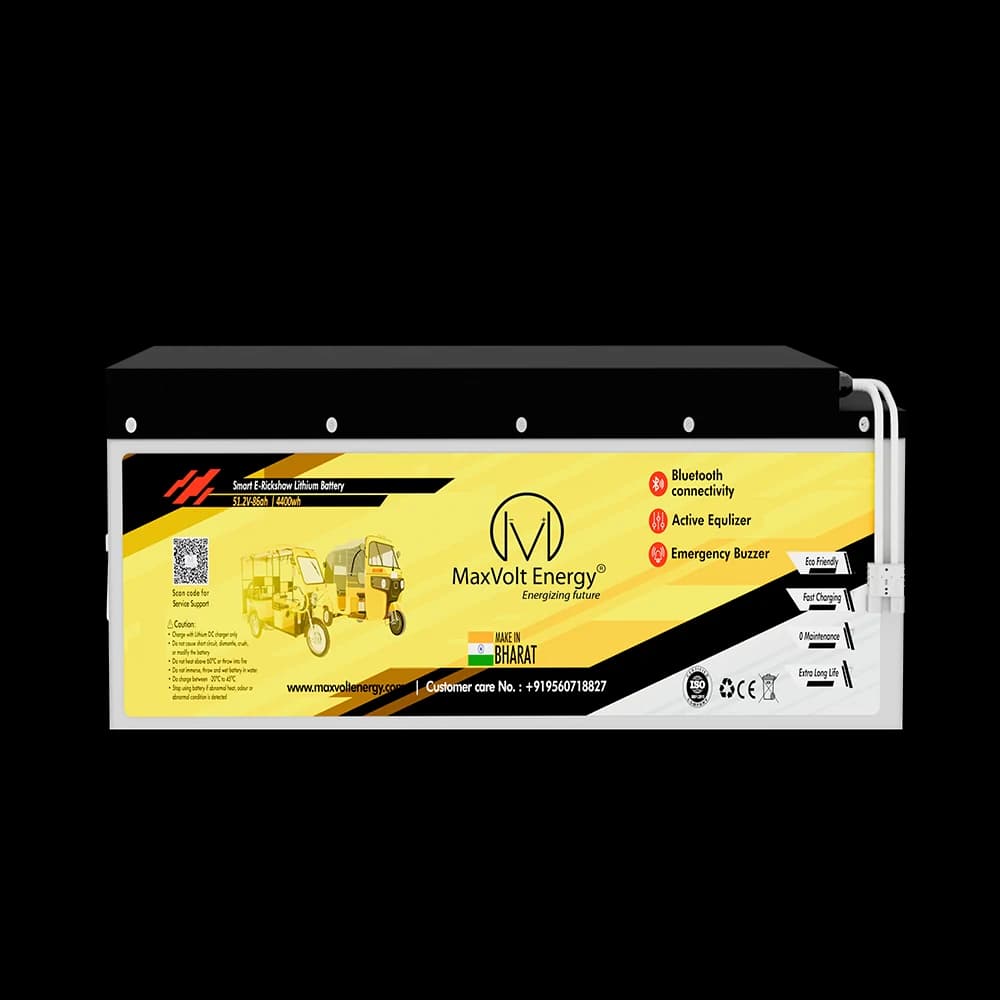
India's EV market is overwhelmingly two- and three-wheeler today — e-scooters, e-bikes and e-rickshaws — and the battery is the single most expensive, most failure-prone, and most decisive component in how well that vehicle actually performs. Range, charging time, resale value and running cost all trace back to the battery pack, not the motor or frame.
This guide covers how EV batteries actually work, what genuinely affects how long one lasts, and what drives the price difference between a ₹15,000 unbranded pack and a certified one from an established manufacturer.
How an EV Battery Pack Is Built
An EV battery isn't a single unit — it's dozens or hundreds of individual lithium cells connected in series and parallel to reach the target voltage and capacity, wrapped in a protective case, and controlled by a Battery Management System (BMS) that keeps every cell within safe operating limits.
The pack's chemistry — most commonly LiFePO4 (LFP) for three-wheelers and stationary use, or NMC for lighter two-wheelers — determines its energy density, cycle life and thermal behaviour. See our full breakdown in the lithium battery guide and the LFP vs NMC comparison linked below.
What Determines EV Battery Lifespan
Cycle life (how many full charge-discharge cycles the pack can handle before capacity drops meaningfully) is the primary lifespan driver, and it's set mostly by chemistry and cell quality — LFP packs from a reputable manufacturer typically deliver 2,000 to 3,500+ cycles.
In practice, three things shorten real-world lifespan faster than chemistry alone: heat (parking and charging in direct sun stresses cells), a weak or absent BMS (letting cells overcharge, over-discharge or drift out of balance), and consistently deep discharges to 0% rather than a healthier operating range.
For a daily-use e-rickshaw or delivery scooter, a well-built lithium pack should deliver 5+ years of service — several times what a lead-acid pack in the same vehicle would manage.
What Drives EV Battery Price in India
Raw cell cost (chemistry, cell brand/tier, and global lithium/cobalt/nickel prices) is the largest single input, followed by capacity — a 51.2V 100Ah pack costs meaningfully less than a 200Ah pack of the same chemistry.
BMS sophistication (basic protection vs. a cloud-connected smart BMS with app monitoring), certification and testing overhead, and after-sales service network all add real cost on top of the cells — which is why a certified branded pack costs more than an unbranded equivalent capacity, but typically costs less over its full service life.
Common Applications
Frequently Asked Questions
How long does an EV battery last in India?
A quality LiFePO4 EV battery typically delivers 2,000–3,500+ cycles — roughly 5+ years of daily commercial use for an e-rickshaw or delivery scooter, assuming reasonable charging habits and heat management.
What is the price of an EV battery in India?
Price depends on voltage, capacity and chemistry — an e-scooter pack (48V–74V, 24–40Ah) and an e-rickshaw pack (51.2V, 86–200Ah) are priced differently. Contact Maxvolt or an authorized dealer for current pricing on a specific configuration.
Can I replace a lead-acid EV battery with lithium?
In most cases yes, provided the voltage matches and there's physical space for the (typically smaller, lighter) lithium pack. Share your vehicle model and current battery spec with our team to confirm compatibility.
How is an EV battery different from a regular lithium battery?
It isn't a different chemistry class — an EV battery is a lithium pack (usually LFP or NMC) engineered for a vehicle's specific voltage, discharge-current and vibration/shock requirements, with a BMS tuned for driving conditions rather than stationary use.
Explore Further
Chemistry types and how to evaluate a pack.
Which chemistry suits which vehicle class.
The component that actually determines real-world lifespan.
Maxvolt's NMC/LiFePO4 two-wheeler range.
51.2V LiFePO4 packs for three-wheelers.
What happens to an EV battery at end of life.
Have a Question About EV Battery Guide: Chemistry, Lifespan & Price Factors?
Talk to our team for sizing help, pricing, or technical guidance — no obligation.