Battery Certification in India: AIS 156, ISO 9001 & What They Verify
What AIS 156 and ISO 9001:2015 certification actually verify, why they matter, and how to check a certificate is genuine.
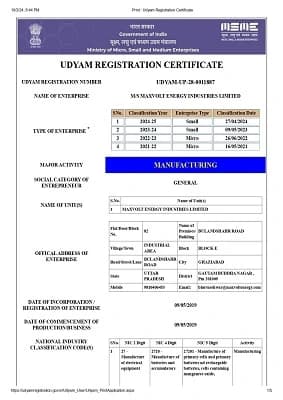
"Certified" gets used loosely in battery marketing — but a small number of specific certifications actually mean something verifiable, and knowing what each one covers is the fastest way to tell a genuinely tested product from one that just claims to be.
AIS 156 — India's EV Battery Safety Standard
AIS 156 (Automotive Industry Standard 156) is the Government of India standard governing electric vehicle battery safety, developed and enforced following a series of high-profile EV fire incidents. It tests thermal propagation (how a single faulty cell affects neighbouring cells), short-circuit protection, overcharge and over-discharge behaviour, vibration and mechanical shock resistance.
AIS 156 certification is model-specific — a manufacturer being "AIS 156 certified" in general isn't the same as a specific battery model holding a valid Type Approval Certificate (TAC) for that exact model and rating. Always ask for the TAC for the specific model you're buying, not just a general claim of compliance.
ISO 9001:2015 — Quality Management Certification
ISO 9001:2015 doesn't certify the product directly — it certifies that the manufacturer's quality management processes meet an internationally recognized standard for consistency, documentation and continuous improvement. For a battery buyer, this is a signal that the manufacturing process (not just individual sample units) is built to produce consistent quality at scale, which matters especially for bulk, fleet or OEM orders.
How to Verify a Certificate Is Genuine
A genuine Type Approval Certificate names the specific battery model, rating, and testing agency, and should be available for the manufacturer to show on request — not just referenced vaguely. Cross-check that the model number on the certificate matches what's printed on the battery itself.
For ISO 9001:2015, the certifying body's name and certificate number should be verifiable — Maxvolt's ISO 9001:2015 certification, for example, is issued by QCC (Quality Control Certification, IAF Accredited) and covers manufacturing of lithium batteries for EVs, energy storage, electronic gadgets and medical equipment. Reputable manufacturers publish their certificates rather than only stating compliance in marketing copy.
Frequently Asked Questions
Is AIS 156 mandatory for EV batteries in India?
AIS 156 certification is the government safety standard EV battery packs are expected to meet in India, and reputable manufacturers certify each model individually with a Type Approval Certificate.
What's the difference between AIS 156 and ISO 9001:2015?
AIS 156 certifies the battery's safety performance (thermal, short-circuit, mechanical testing) for a specific model. ISO 9001:2015 certifies the manufacturer's quality management process, ensuring consistent production quality — they verify different things and a serious manufacturer holds both.
How do I check if a Type Approval Certificate is real?
Ask the manufacturer to show the certificate for your specific model, confirm the model number matches what's printed on the battery, and check that a named, recognized testing agency issued it.
Is Maxvolt AIS 156 and ISO 9001:2015 certified?
Yes — Maxvolt holds AIS 156 Type Approval Certificates for its EV battery models, and ISO 9001:2015 certification (via QCC, IAF Accredited) covering its manufacturing of lithium batteries across EV, energy storage, electronics and medical applications. See our certificates page for the documents.
Explore Further
View Maxvolt's actual certification documents.
Where certification fits in the integration process.
Why certification matters for safety, not just compliance.
Why certified batteries cost more, and why that's often worth it.
Have a Question About Battery Certification in India: AIS 156, ISO 9001 & What They Verify?
Talk to our team for sizing help, pricing, or technical guidance — no obligation.