Lithium vs Lead-Acid Battery: Full Comparison
Cycle life, weight, charging time, maintenance and total cost of ownership compared, for EVs, inverters and solar storage.
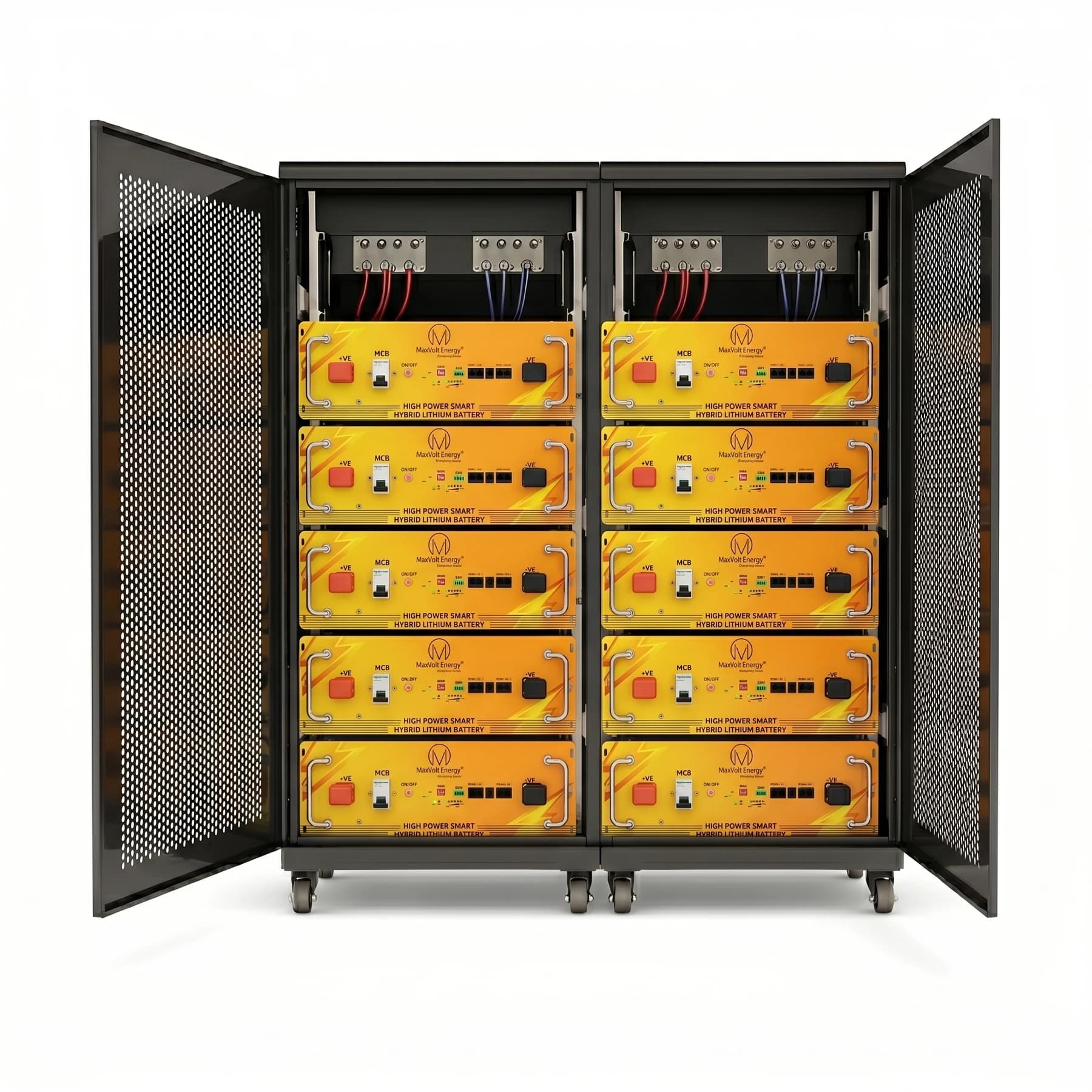
Lead-acid has powered Indian vehicles and home inverters for decades, and it's still the cheaper option on the price tag. Lithium (typically LiFePO4 for these applications) costs more upfront but wins decisively on almost every other measure — which is why it's become the default choice for new EVs and is rapidly replacing lead-acid in home inverters and solar storage.
Here's the actual comparison, not just the marketing version.
Why the Upfront Price Gap Doesn't Tell the Whole Story
A lead-acid battery costs less to buy, but at 300–500 cycles it needs replacing three to six times over the period a single lithium pack lasts. Add the value of downtime — 6–8 hours on the charger versus 2–3 for lithium — and the total cost of ownership for lithium is typically lower within 2–3 years of use for anything cycled daily, like an e-rickshaw or a home inverter that sees regular power cuts.
For applications cycled rarely (a backup that's used only occasionally), the gap narrows, since lead-acid's shorter cycle life matters less when cycles themselves are infrequent.
When Lead-Acid Still Makes Sense
Lead-acid remains a reasonable choice for genuinely low-budget, low-cycle applications where the battery will rarely be deep-cycled and total lifetime cost isn't the deciding factor — or where the higher upfront cost of lithium simply isn't available. For anything used daily — EVs, e-rickshaws, or a home inverter in an area with frequent outages — lithium's cycle life and charging speed advantages compound quickly enough to outweigh the price gap.
Lithium (LiFePO4) vs Lead-Acid — Side by Side
| Factor | Lithium (LiFePO4) | Lead-Acid |
|---|---|---|
| Cycle life | 2,000 – 3,500+ cycles | 300 – 500 cycles |
| Typical lifespan | 5+ years (daily use) | 1 – 2 years |
| Charging time | 2 – 3 hours | 6 – 8 hours |
| Weight (equivalent capacity) | ~50% lighter | Baseline |
| Maintenance | None | Regular water top-up |
| Usable depth of discharge | 80 – 100% | ~50% (deeper harms lifespan) |
| Efficiency (round-trip) | >95% | 70 – 85% |
| Upfront cost | Higher | Lower |
| Cost over 5 years | Typically lower | Typically higher (replacements) |
| Performance in heat | Stable (LFP) | Degrades faster |
Frequently Asked Questions
Is lithium really worth the extra cost over lead-acid?
For daily-cycled applications (EVs, e-rickshaws, inverters with frequent power cuts), yes — the cycle-life and charging-speed advantages typically pay back the price difference within 2–3 years. For rarely-used backup, the gap is smaller.
Can I directly replace a lead-acid battery with lithium?
In most cases yes, provided the voltage matches — lithium packs are typically smaller and lighter for the same capacity, so physical fit is rarely an issue. Confirm compatibility with the equipment manufacturer or Maxvolt's team.
Which lasts longer in Indian summer heat — lithium or lead-acid?
LiFePO4 lithium batteries handle heat significantly better than lead-acid, which degrades faster at high temperatures. This is a major reason LFP has become standard for Indian e-rickshaws and solar storage.
Explore Further
What a lithium battery is and how chemistries differ.
Comparing the two main lithium chemistries.
Choosing a lithium inverter battery for home backup.
Lithium vs lead-acid for e-rickshaws specifically.
Size a replacement lithium battery.
Have a Question About Lithium vs Lead-Acid Battery: Full Comparison?
Talk to our team for sizing help, pricing, or technical guidance — no obligation.