Lithium Battery Manufacturers in India: How to Evaluate & Choose
How India's lithium battery manufacturing landscape is structured, and what actually separates a real manufacturer from an assembler.
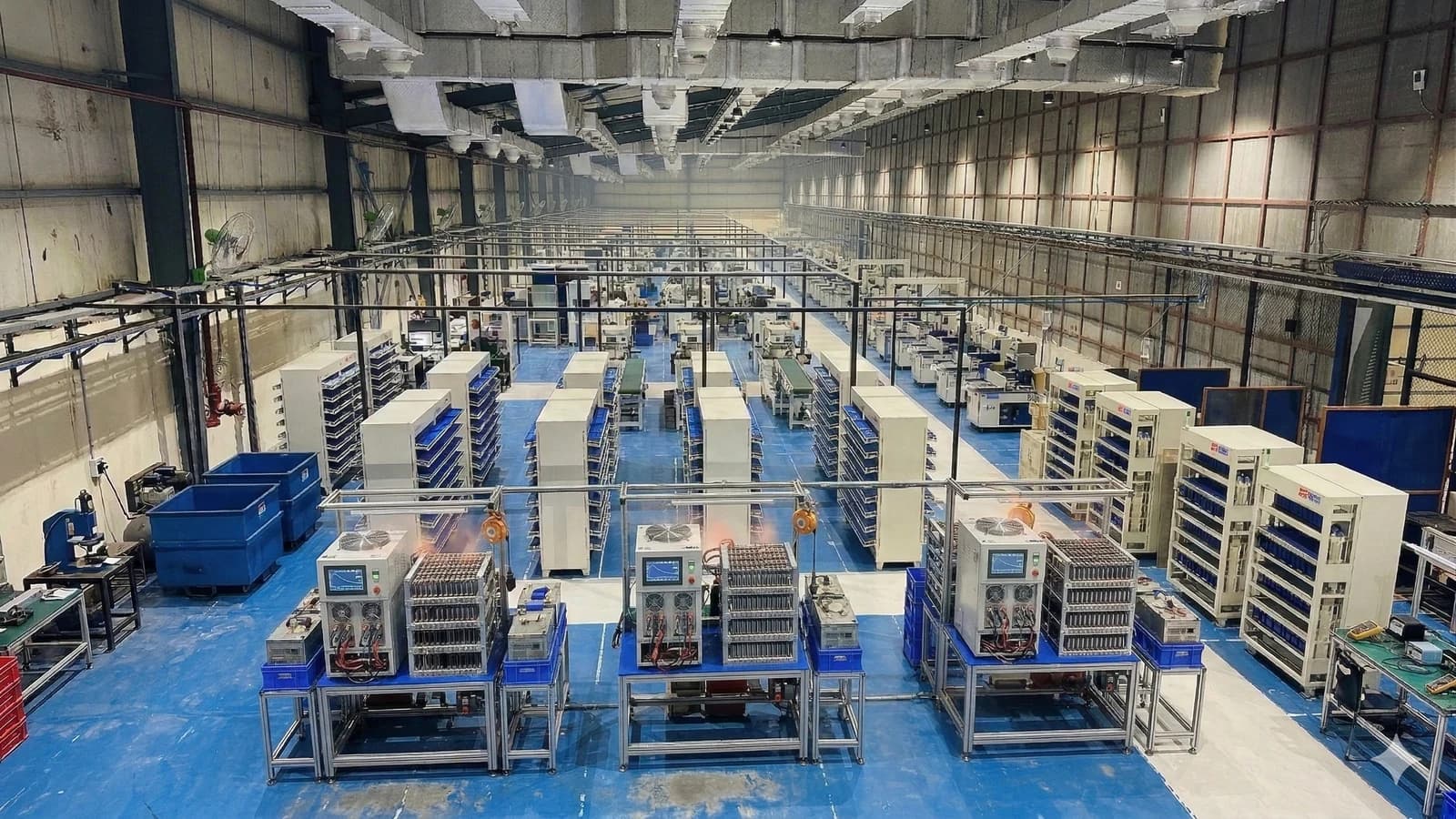
India's lithium battery manufacturing base has grown quickly over the last five years, driven by EV adoption, solar storage, and the phase-out of lead-acid in home inverters. Searching for "lithium battery manufacturers in India" today turns up a mix of very different kinds of companies — and the differences between them matter more than the search results usually make clear.
Broadly, two categories show up under that search: large, diversified industrial groups with legacy roots in lead-acid or other manufacturing who are expanding into lithium cell and pack production, and companies built specifically around lithium battery design and manufacturing from the start. Neither category is automatically better — but understanding which one you're evaluating changes what questions you should ask.
The Two Kinds of "Manufacturer" You'll Find
Diversified industrial groups: several of India's largest names in this space built their scale in adjacent industries — automotive lead-acid batteries, industrial power, or solar EPC — and are now investing in lithium cell and pack manufacturing as a newer business line. Their advantage is capital and existing distribution; lithium-specific manufacturing is often a more recent addition to a much older core business.
Dedicated lithium battery manufacturers: companies built around lithium-ion pack design, BMS engineering, and cell integration as their primary business, typically serving EV OEMs, e-rickshaw and e-scooter fleets, solar installers, and inverter replacement demand directly. Maxvolt Energy falls in this category — an NSE SME Emerge-listed, AIS 156 and ISO 9001:2015 certified manufacturer with in-house pack assembly and BMS design.
Neither structure guarantees quality on its own — a legacy group's lithium division can be excellent, and a newer dedicated manufacturer can be excellent too. What actually determines quality is covered below.
What Actually Separates a Manufacturer from an Assembler
In-house pack engineering vs. re-badged imports: a genuine manufacturer designs its own BMS, engineers pack-level thermal and safety protection, and controls its own cell sourcing and quality testing. An assembler buys complete finished packs (often imported) and sells them under its own brand with minimal engineering input. Both can look identical on a spec sheet — the difference shows up in failure rates and long-term support.
AIS 156 certification with a specific Type Approval: Government of India's AIS 156 battery safety standard requires a Type Approval Certificate for each specific model, not a generic claim of "AIS 156 compliant." Ask for the certificate number and model match — not just the badge.
ISO 9001:2015-certified manufacturing: this certifies the manufacturing quality management process itself, not just the product. It's a reasonable proxy for whether a company treats manufacturing as a controlled process or an assembly line with no formal quality system.
Domestic manufacturing footprint: a real manufacturer can name and, ideally, let you verify its actual production facility. "Manufacturer" without a disclosed, inspectable plant is worth treating with more scrutiny.
Questions to Ask Before Choosing One
Can you provide the AIS 156 Type Approval Certificate for this exact model, not just a general compliance statement?
Is the BMS designed in-house, and does it include active cell balancing and documented overcharge/over-discharge/short-circuit protection?
What is the actual cycle-life warranty in writing — not just the marketing claim — and what voids it?
Does the company have a verifiable service and dealer network, or is after-sales support limited to a call center?
For OEM or bulk buyers: is the company publicly listed or otherwise subject to financial disclosure, and can its manufacturing capacity be independently verified?
Evaluation Checklist: What to Verify Before Buying
| Criteria | What to Look For |
|---|---|
| Certification | AIS 156 Type Approval Certificate matched to the exact model, plus ISO 9001:2015 manufacturing certification. |
| Manufacturing depth | In-house BMS design and pack assembly, not a re-badged imported pack. |
| Warranty | Written cycle-life and duration terms, with clear conditions — not just a marketing claim. |
| Service network | Verifiable dealer or service-center presence in your state, not a call-center-only model. |
| Transparency | Willingness to share certificate numbers, plant details, and (for bulk/OEM buyers) audited financials. |
Common Applications
Frequently Asked Questions
Who are the lithium battery manufacturers in India?
The field includes large diversified industrial groups expanding into lithium from legacy lead-acid or industrial-power businesses, alongside companies built specifically around lithium battery design and manufacturing, such as Maxvolt Energy. Evaluate each on certification, in-house engineering depth, and service network rather than by category alone.
How do I verify a manufacturer's AIS 156 certification?
Ask for the Type Approval Certificate number for the exact model you're buying, not a general compliance statement — AIS 156 certification is issued per model, not as a blanket claim covering an entire product line.
Is Maxvolt Energy a manufacturer or a reseller?
Maxvolt is an NSE SME Emerge-listed, AIS 156 and ISO 9001:2015 certified manufacturer with in-house pack assembly and BMS design at its own facility — see our Certificates page for the underlying documentation.
What's the difference between a lithium battery manufacturer and an assembler?
A manufacturer designs its own BMS, controls cell sourcing and testing, and engineers the pack; an assembler buys complete finished packs — often imported — and sells them under its own brand with minimal engineering input of its own.
Does a bigger, more established company always mean a better battery?
Not necessarily. Company size and legacy indicate resources, but the actual quality determinants are certification, in-house engineering, and warranty/service commitments — which any manufacturer, large or newer, can get right or wrong.
Explore Further
Chemistry, types and what to check before buying.
What AIS 156 and ISO 9001:2015 actually verify.
Maxvolt's AIS 156, ISO and Udyam certificates.
Our manufacturing footprint and company history.
For bulk and OEM procurement evaluation.
Have a Question About Lithium Battery Manufacturers in India: How to Evaluate & Choose?
Talk to our team for sizing help, pricing, or technical guidance — no obligation.