LFP vs NMC Battery: Which Chemistry Is Right for You?
LiFePO4 (LFP) vs NMC lithium battery chemistry compared, with guidance on which suits which application.
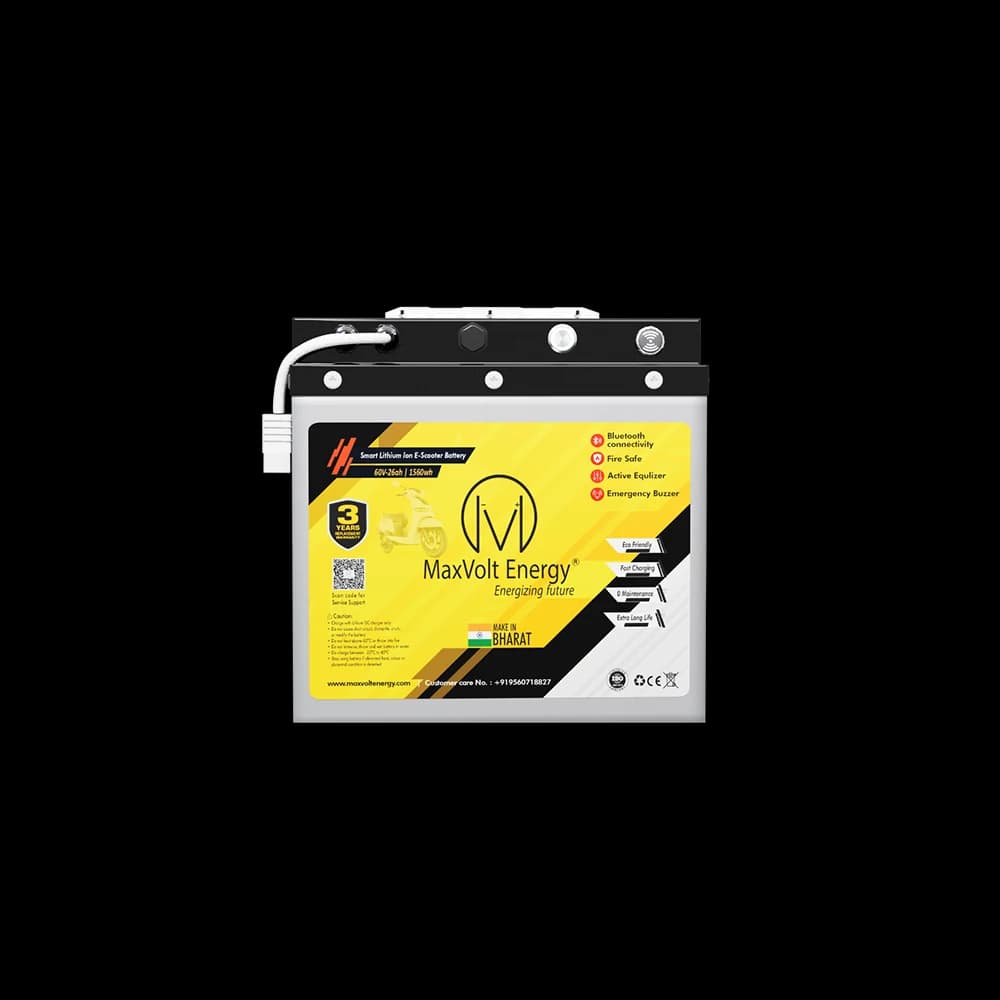
LFP (lithium iron phosphate) and NMC (nickel manganese cobalt) are the two lithium-ion chemistries you'll actually encounter in Indian EVs and energy storage — and they're genuinely different products suited to different jobs, not just competing brands of the same thing.
Neither chemistry is universally "better" — the right choice depends on whether weight and range or cycle life and thermal safety matter more for a given application.
Why E-Rickshaws Use LFP and Scooters Often Use NMC
An e-rickshaw is cycled hard, every day, for years, and carries its weight low and centrally — cycle life and thermal safety matter far more than shaving off a few kilograms. LFP's 2,500–3,500+ cycle rating and strong heat tolerance make it the standard choice for three-wheelers and stationary storage across the industry.
A scooter or bike, by contrast, is far more sensitive to pack weight — it directly affects handling, acceleration and range per charge. NMC's higher energy density lets manufacturers fit more usable capacity into a lighter, slimmer pack, which is why it's common in two-wheelers, even though its cycle life is lower than LFP's.
Which Does Maxvolt Use?
Maxvolt builds both chemistries and matches them to the application: LFP across our e-rickshaw, solar, inverter and energy storage ranges, and a choice of NMC or LFP for e-scooters and bikes depending on the customer's priority between weight/range and cycle life. Our custom battery pack program can also engineer either chemistry to a specific OEM's voltage, capacity and form-factor requirement.
LFP vs NMC — Side by Side
| Factor | LFP (LiFePO4) | NMC |
|---|---|---|
| Energy density | Lower | Higher (lighter for same capacity) |
| Cycle life | 2,500 – 3,500+ cycles | 1,000 – 2,000 cycles |
| Thermal stability | Excellent | Good, more heat-sensitive |
| Cost per kWh | Generally lower | Generally higher |
| Typical use | E-rickshaws, solar, BESS, inverters | E-scooters, performance two-wheelers |
| Weight (equivalent capacity) | Heavier | Lighter |
| Cold-weather performance | Moderate | Slightly better |
Frequently Asked Questions
Is LFP or NMC safer?
LFP has meaningfully better thermal stability and is less prone to thermal runaway than NMC, which is a major reason it's preferred for high-cycle, safety-critical applications like e-rickshaws and stationary storage.
Which lasts longer, LFP or NMC?
LFP typically delivers 2,500–3,500+ cycles versus roughly 1,000–2,000 for NMC — meaning an LFP pack under similar use generally lasts noticeably longer before capacity fades meaningfully.
Why don't e-scooters just use LFP if it lasts longer?
They can, and some do — but NMC's higher energy density lets manufacturers build lighter, more compact packs, which matters more for two-wheeler range and handling than it does for a three-wheeler or stationary system.
Can I choose the chemistry for a custom battery pack?
Yes — Maxvolt's custom battery pack program can engineer either LFP or NMC (or other chemistries on request) to your application's specific voltage, capacity, weight and cycle-life requirements.
Explore Further
The broader lithium chemistry landscape.
Lithium chemistries compared against the older technology.
How chemistry choice affects EV battery lifespan.
Maxvolt's NMC/LiFePO4 two-wheeler range.
Maxvolt's LiFePO4 three-wheeler range.
Chemistry engineered to your application.
Have a Question About LFP vs NMC Battery: Which Lithium Chemistry Is Right for You??
Talk to our team for sizing help, pricing, or technical guidance — no obligation.