Small-Scale vs Large-Scale Lithium Battery Manufacturers in India: Does Size Predict Quality?
Does manufacturer size actually predict battery quality? What larger scale typically buys you, and what matters more than either.
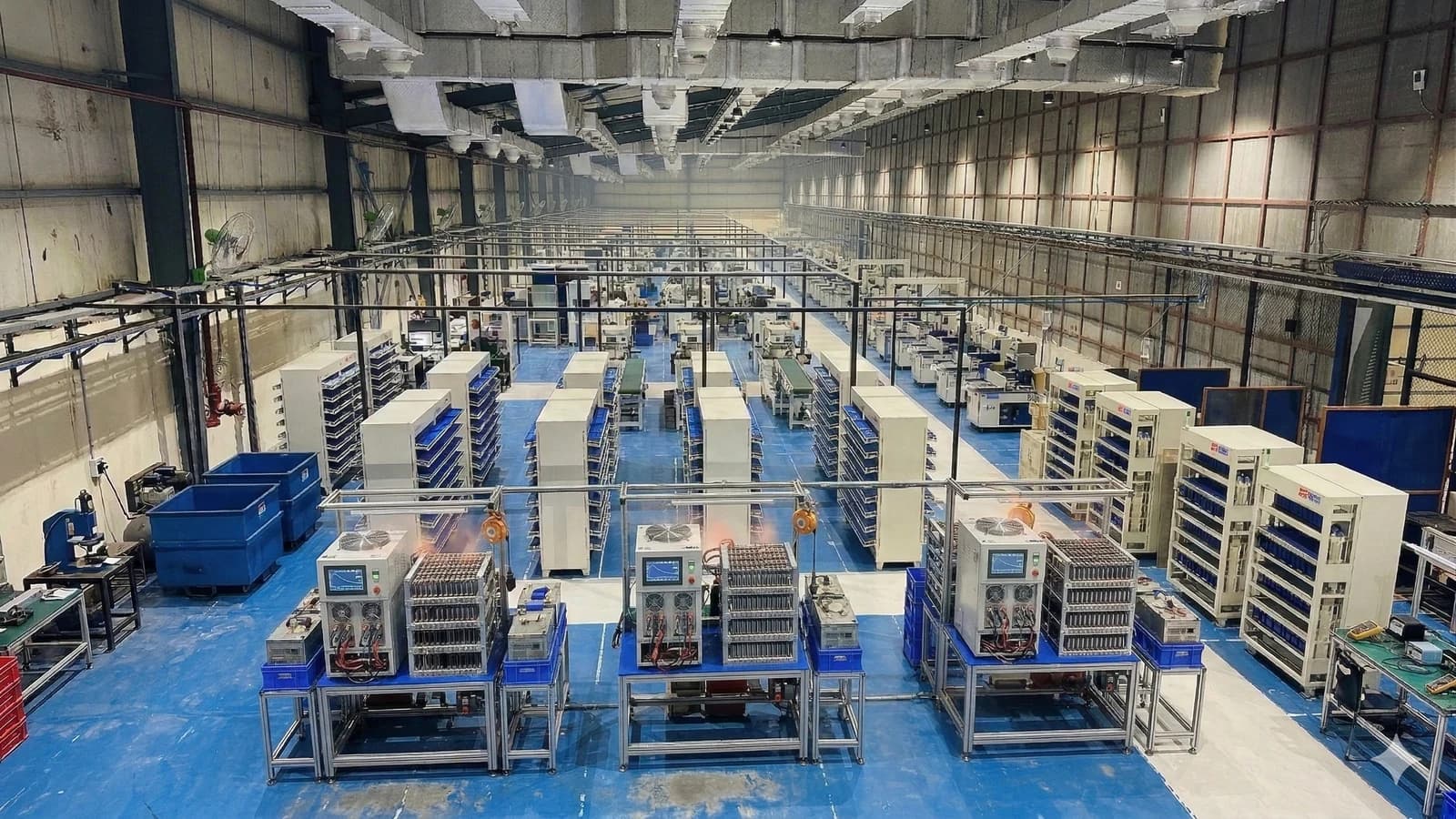
A common assumption when choosing a lithium battery supplier is that bigger is automatically safer — a larger, more established manufacturer must make a better product than a smaller, more specialized one. That assumption is only partly right, and treating it as a rule can lead to overpaying for scale you don't need, or dismissing a manufacturer whose certification and engineering are actually stronger than a bigger name's.
Here's what scale actually does and doesn't tell you.
What Larger Scale Typically Buys You
Larger manufacturers generally have bulk cell-purchasing leverage, wider geographic distribution and dealer networks, and a longer operating history that's easier to research. For very large or geographically spread-out procurement — a national fleet rollout, for instance — that distribution reach can genuinely matter operationally.
Scale can also mean more capital available for R&D and testing infrastructure — though this is a tendency, not a guarantee; plenty of large manufacturers under-invest in specific product lines relative to their size.
What Smaller, Specialized Manufacturers Often Offer Instead
A smaller or more specialized manufacturer is often faster to customize a pack to an unusual specification, because the same engineering team is directly involved end-to-end rather than a request moving through multiple layers of a larger organization. Support and warranty claims can also be more directly accountable — you're often dealing with the people who actually built the pack, not a call center.
Focus is the other factor: a manufacturer whose entire business is lithium battery engineering may bring more depth to that specific product than a division within a much larger, more diversified company for which batteries are one of several business lines.
Why Scale Isn't a Proxy for Certification or Quality
AIS 156 Type Approval and ISO 9001:2015 manufacturing certification are earned per model and per facility — a smaller manufacturer with rigorous certification and in-house BMS engineering is not automatically less compliant or less safe than a larger one. Conversely, size alone doesn't certify anything; a large company's older or lower-priority product lines can still be under-engineered.
The practical takeaway: use certification, warranty terms, and service commitments as your actual quality filters — see our manufacturer evaluation guide for the full checklist — and treat company size as one input about distribution and support capacity, not a quality signal on its own.
Scale Trade-Offs at a Glance
| Factor | Larger-Scale Manufacturer | Smaller / Specialized Manufacturer |
|---|---|---|
| Geographic distribution | Typically broader, established dealer networks | Often more regionally focused, growing |
| Customization speed | Can be slower — moves through more layers | Often faster, direct engineering access |
| Support accountability | May route through call-center support | Frequently more direct with the engineering team |
| Product-line focus | Batteries may be one of several business lines | Often the manufacturer's entire core business |
| Certification & quality | Depends on the specific model — not guaranteed by size | Depends on the specific model — not excluded by size |
Frequently Asked Questions
Is a bigger lithium battery manufacturer always more reliable?
Not automatically. Larger scale typically means broader distribution and more resources, but certification, in-house engineering quality, and warranty commitments — which any manufacturer can get right or wrong — are the actual determinants of reliability, not company size alone.
Are smaller lithium battery manufacturers less safe?
Not inherently. AIS 156 Type Approval and ISO 9001:2015 certification are earned per model and facility, regardless of company size. A smaller, specialized manufacturer with rigorous certification can be as safe as, or safer than, a larger diversified company's battery division.
When does manufacturer scale actually matter for a buyer?
Mainly for large, geographically distributed procurement — a national fleet rollout, for example — where distribution reach and dealer network breadth have real operational value. For most individual or business buyers, certification and service commitments matter more than scale.
Where does Maxvolt Energy fit on this spectrum?
Maxvolt is a dedicated, AIS 156 and ISO 9001:2015 certified lithium battery manufacturer with in-house pack engineering and a growing dealer network — see our About page and Certificates page for specifics.
Explore Further
The full manufacturer evaluation framework.
Another axis: where a battery is actually manufactured.
Why listed status matters, independent of scale.
Our manufacturing footprint and company history.
Have a Question About Small-Scale vs Large-Scale Lithium Battery Manufacturers in India?
Talk to our team for sizing help, pricing, or technical guidance — no obligation.